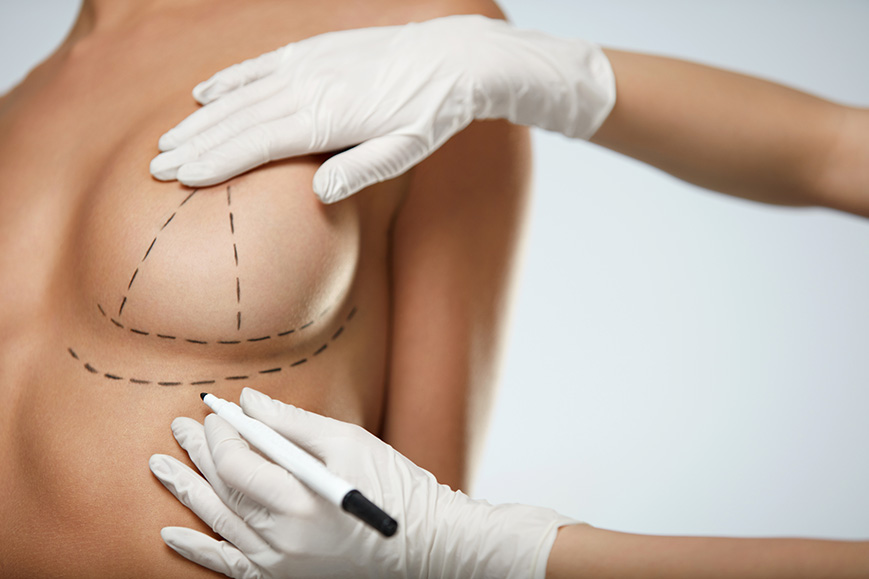
One of the most common questions we get at Austin Plastic Surgeon is why we put an implant above or below the muscle, and when a patient should pick one over the other. It’s a fair question, and the real answer is that the best placement has changed a lot over the past decade. What was standard 20 years ago isn’t automatically the answer anymore. We are in the midst of a paradigm change. It is important to understand that a lot of the techniques that have been standard for the past 20-30 years were designed because of the implants that were available in the United States. As implants have improved, and our anatomical understanding continues to improve, so do our options for patients. The gummy bear implants (highly cohesive gel breast implants) have changed what we can offer patients for their breast augmentation.
Contents
Why did implants go under the muscle in the first place?
If you look at it historically, most breast implants in the United States over the past 20 to 30 years or so went underneath the muscle or half under the muscle, as was popularized by social media. A lot of that came down to the limitations of the implants themselves, especially during the roughly 13-year stretch when saline breast implants were the only option on the market.
Saline implants were firm, prone to rippling, and had a fairly unnatural look. At the end of the day, it was an overfilled water balloon. Putting the implant under the muscle added a layer of coverage that helped hide those flaws, so submuscular or at least partially submuscular implant placement became a solution to soften the appearance of the breast implant. It wasn’t because under the muscle was anatomically ideal. We were compensating for the implants we had at the time. With saline implants that were available 20–30 years ago, placing them under the muscle definitely helped soften the appearance of the implants and give them a much more natural appearance.
What changed?
Gummy bear implants changed what was possible for breast enhancement. With the newer cohesive gel implants, creating a more natural-appearing breast, plastic surgeons have many more options. However, it wasn’t just a more natural-appearing breast; the highly cohesive gel implants (gummy bear implants) also felt much softer and decreased the risk of visible rippling. These were all the reasons that breast implants were being placed under the muscle for so many years. The trend to place breast implants above the muscle actually started in breast reconstruction and has transitioned to the world of aesthetic and breast augmentation. The 6th generation Motiva breast implants and the absorbable mesh, often referred to as an internal bra, have made this possible for our patients. Patients now can have a natural-appearing breast without the compensatory procedures such as hiding the implant under the muscle. You’ve seen this evolution play out for a while now, and no question, over the past three to five years more implants are going above the muscle.
The reasoning is simple. Nobody really wants to lift a muscle and change your natural anatomical architecture. We were doing it because we had to, to improve the appearance and minimize the risk of capsular contracture, rippling, and unnatural appearance of your breasts. In the past, going under the muscle with older-generation implants did lower the risk of capsular contracture. Two things have shifted with the newer implants, though. One, you can get a natural appearance over the muscle. Two, recent studies show capsular contracture rates are very similar whether the implant sits above or below, and some of the newest sixth-generation implants have extremely low contracture rates in either plane. That creates options for our patients and plastic surgeons in a way that we have never had before. Options, choices—that is the key for our patients.
Why we lean toward above the muscle
Think about what’s actually happening when an implant goes under the muscle. We’re augmenting the breast, but we’ve separated the implant from the breast tissue with a dynamic muscle that moves in ways the breast doesn’t. We’re also bound by the borders of that muscle, which limits where the implant can sit. Some portions of the muscle can be released and others can’t, at least not without secondary effects that don’t help the aesthetic result.
When the implant sits in the same plane as the breast itself, it moves with the breast instead of against it, and you get a more natural look and flow. You also get more control over placement, which matters a lot for shaping.
This is a big part of why preservation breast augmentation has been so useful. A better understanding of the anatomy lets us maximize the natural breast tissue and let the implant sit more harmoniously with the breast. If you can maintain the natural soft tissue support and coverage, you keep the benefits people used to go under the muscle for, without disturbing the muscle at all.
The practical wins are real. Patients tend to recover faster, the augmentation stays more stable over time, and we avoid the secondary effects of submuscular placement, such as lateral displacement, animation deformity, and occasionally more discomfort as the muscle gets stretched into that position.
Does anyone still benefit from under the muscle?
Many surgeons and patients still prefer their implants being placed under the muscle or, more commonly, partially under the muscle (dual plane technique). No question this has been a successful method for many years, and patients have done extremely well with this technique. It’s hard to move away from something that’s been tried and true, and some patients probably do still do better with submuscular or dual plane (half under the muscle) placement. Someone with recurrent capsular contracture, or a patient with essentially no soft tissue coverage, may still be a candidate for under the muscle. Also, patient that have had their implants under the muscle and come for an implant exchange and their only concern is to change the size of the breast implant. If they are doing great with their current placement, then often I won’t complicate things and keep them under the muscle. Obviously, if they are having issues such as animation deformity or malposition, lack of cleavage, then we will review which placement is best for their implant exchange.
Breast augmentation is going to continue to evolve with the addition of fat or fat products such as alloClae. Hybrid breast augmentation gives us more ways to build coverage and support without touching the muscle. That might mean a gummy bear implant with alloClae, or a gummy bear implant with fat transfer, depending on what the patient needs. alloClae and fat transfer do different jobs, but both let us add coverage and support around the implant directly. Add internal mesh bra techniques for structural support, plus newer soft tissue products coming over the next couple of years, and the group of patients who truly need submuscular placement keeps getting smaller. When we can add coverage and support around the implant on its own, we no longer have to lift, move, or disrupt the muscle to get the same effect.
What we do at Austin Plastic Surgeon
In our practice, the vast majority of our breast augmentations and mastopexy augmentations go above the muscle. We have more control of implant placement, and with the new gummy bear implants, the old downsides of going above the muscle have mostly faded away. Novel new techniques such as preservation breast procedures have created opportunities for so many patients that never thought a breast augmentation would be for them. Ultimately, it is about maximizing the results and helping our patients reach their aesthetic goals. The opportunity to place the implant above the muscle has given our patients so many more choices and options that they never had previously.
The space above the muscle fascia and below the breast gland is truly a dynamic area, and it’s where a lot of the future of breast enhancement is headed. It works for traditional implants, fat transfer, and AlloClae, all within the same concept and the same plane. As breast enhancement continues to evolve, patients ultimately benefit from having more choices, not fewer.
Already have implants under the muscle?
You still have options. For patients who went under the muscle and are dealing with issues such as animation deformity, we perform what we call a breast restoration procedure. We remove the implant, restore the muscle to its anatomical position, and start fresh. From that restored foundation, we can use a modified preservation or above-the-muscle technique to rebuild the breast. This resolves issues with animation deformity, implant malposition, and the limitations previously set by the boundaries of the muscle.
This has created options for patients who have struggled with a previous augmentation. Breast restoration procedures often give patients a fresh start, a reset to their breast augmentation. It restores both the appearance and the shape of the breast, and it helps them reach their aesthetic goals.
FAQ
Is above or below the muscle better for breast implants?
Neither is better across the board. With modern cohesive gel (gummy bear) implants, above the muscle now gives most patients a natural result with faster recovery and no animation deformity. Below the muscle still makes sense in select cases, like recurrent capsular contracture or very thin soft tissue coverage.
Does putting the implant under the muscle prevent capsular contracture?
It helped with older-generation implants. Recent studies show contracture rates are very similar above and below the muscle with newer implants, and the latest sixth-generation implants show extremely low rates in either position.
What is animation deformity?
It’s visible movement or distortion of the breast when the chest muscle flexes, and it can happen when an implant sits under the muscle. Placing the implant above the muscle avoids it, and breast restoration can correct it in patients who already have it.
What’s the difference between AlloClae and fat transfer?
Both add coverage and support around the implant so we don’t have to rely on the muscle for it, but they’re different tools. During your consultation, we’ll talk through which one fits your anatomy and goals. Both can be used for a stand-alone augmentation. Alloclae is an off-the-shelf fat product that avoids the need for liposuction or creates options for patients that don’t have any fat available.
Can I switch from under the muscle to above the muscle?
Yes. A breast restoration procedure removes the implant, returns the muscle to its natural position, and rebuilds the augmentation above the muscle from a fresh foundation. Dr. Johnny Franco is a board-certified plastic surgeon and the founder of Austin Plastic Surgeon, with locations in Austin, Westlake Hills, and San Antonio. Have questions about implant placement or breast restoration? Schedule a consultation with our team.